Throughout the world, there are many places named after cities and regions that have cultural, historical, or geographical ties to another part of the world. Australia, with its multicultural backdrop, offers a rich tapestry of locations with names reminiscent of regions from India. These locations, often established or named by early settlers or migrants, serve as a reminder of the deep ties between Australia and India.
This article delves into the five places across Australia that are named after cities in India: Lucknow, Mangalore, Malabar, Surat, and Punjab. These places, whether by coincidence or design, highlight the shared history and heritage between India and Australia. Many of these areas have become vibrant multicultural hubs, serving as testament to the enduring connections between the two countries. Let’s explore each city in detail, providing a glimpse into their backgrounds, cultural significance, and current-day role in both the Australian landscape and their Indian counterparts.
1. Lucknow (India) vs Lucknow (Australia)
Lucknow, in Uttar Pradesh, India, is one of the country’s most culturally significant cities. Known as the “City of Nawabs,” Lucknow is famed for its distinct blend of Mughal and Awadhi cultures, culinary traditions (notably kebabs), and its intricate Chikan embroidery. This city is deeply tied to India’s cultural and political history, and its reputation for hospitality and grandeur has made it a symbol of Indian royalty and elegance.
However, a lesser-known counterpart exists in New South Wales, Australia, in the region of Orange, about 245 kilometers west of Sydney. This Lucknow is a small locality named in the late 19th century. While the Australian Lucknow does not bear the same rich historical weight as its Indian namesake, it nevertheless serves as a notable reminder of the Indian diaspora’s influence in Australia. There are no exact population statistics for this specific suburb, but the broader Orange region, where Lucknow is located, is home to around 40,000 people.

2. Mangalore (India) vs Mangalore (Australia)
Mangalore, India, located in the southern state of Karnataka, is a major port city on the Arabian Sea known for its stunning beaches, temples, and cultural diversity. Mangalore is an important economic hub in India, famed for its fishing industry and its role as a commercial port. The city’s rich cultural blend includes Hindu, Christian, and Muslim communities, making it a testament to India’s religious diversity.
Similarly, Australia’s Mangalore, located in Victoria, draws its name from the Indian city. This region is much smaller than its Indian counterpart, located about 10 kilometers from the city of Melbourne. Historically, it was an agricultural area but has since developed into a suburban locale with a focus on residential and commercial development. The population of Mangalore in Australia is relatively small, with fewer than 2,000 residents, but its connection to the Indian Mangalore carries a cultural significance that continues to inspire pride among local residents with Indian heritage.

3. Malabar (India) vs Malabar (Australia)
In southern India, Malabar refers to the coastal region along the Arabian Sea in Kerala. This area is famous for its diverse cultural mix, breathtaking beaches, and significant historical importance due to its colonial past, especially with the Portuguese, Dutch, and British influences. Malabar cuisine, particularly its rich seafood and biryani dishes, is known worldwide.
The Malabar in New South Wales, Australia, is located near the eastern suburbs of Sydney. While the Australian Malabar does not boast the same historical significance as the Indian Malabar, it is a cherished residential suburb offering panoramic views of the Pacific Ocean. Known for its beaches, parks, and proximity to Sydney, this area has become home to a multicultural community, with many residents of Indian and South Asian descent. The population here is growing steadily, with a community of over 7,000 people.

4. Surat (India) vs Surat (Australia)
Surat, one of India’s most important cities, is located in Gujarat and is known as the textile hub of India. Often called the “Silk City” or the “Diamond City” due to its prominence in the diamond and textile industries, Surat’s economy thrives on these two sectors. It has a rich history, once being a major port city and a cultural crossroads of the Mughal Empire.
Australia’s Surat, located in Queensland, may not share the same economic significance as its Indian counterpart, but it holds a deep historical connection to the early settlement of the region. Situated in the western part of Queensland, Surat is a small town with a population of just over 1,000. Known for its heritage-listed buildings and rich colonial past, it has transformed from an early river port to a quiet rural area. Surat, Queensland, serves as a reminder of the early colonial expansion, but also of the ongoing influence of Indian culture in Australia, with a growing South Asian population in the surrounding areas.

5. Punjab (India) vs Punjaub (Australia)
The region of Punjab in northern India is one of the most significant cultural, agricultural, and historical regions in the country. Punjab has long been known for its rich agricultural lands, vibrant culture, and the resilient spirit of its people. Punjab’s influence extends globally, particularly in countries like Canada, the United States, and the United Kingdom, where large Punjabi diaspora communities live.
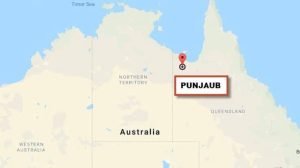
In Australia, the Punjaub region, located in Queensland, is a historical and symbolic counterpart to the Indian Punjab. The name “Punjaub” was coined in the late 19th century, and it reflects the large number of Indian migrants, particularly from Punjab, who settled in Australia during this period. While the Australian Punjaub region is largely rural, it serves as a focal point for the local Indian community, many of whom maintain deep ties to their roots in India. With a population of just over 4,000, the area reflects a blend of Australian rural life with a growing sense of multicultural identity, largely influenced by the Indian diaspora.
A Shared Heritage Across Continents
The cities of Lucknow, Mangalore, Malabar, Surat, and Punjab across India and their counterparts in Australia are more than just names—they are bridges between two worlds. These names symbolize the shared history and evolving connection between India and Australia. They reflect the Indian diaspora’s contributions to the development of Australia, as well as the deep-rooted cultural ties that continue to influence both nations.
Today, these regions stand as reminders of the deep cultural exchanges that have taken place over generations. As the Indian community continues to grow in Australia, these regions will continue to honor the enduring legacy of cultural connection, shared heritage, and the values of unity, resilience, and multiculturalism that both nations cherish.
These regions represent the harmonious blending of two cultures—each bringing its unique traditions, history, and contributions to the multicultural fabric of modern-day Australia. As we look forward to a future shaped by diverse voices and shared experiences, it’s essential to recognize and celebrate these symbolic connections, which remind us of our collective journey and the importance of fostering unity across borders.