Winter in Sydney does not arrive with drama. It arrives quietly in colder nights, longer shadows, and the subtle tightening of life for those already living on the edge.
For thousands across New South Wales, however, winter is not just a season. It is a test of endurance.
On one such evening this week, that reality met something profoundly human: collective compassion.
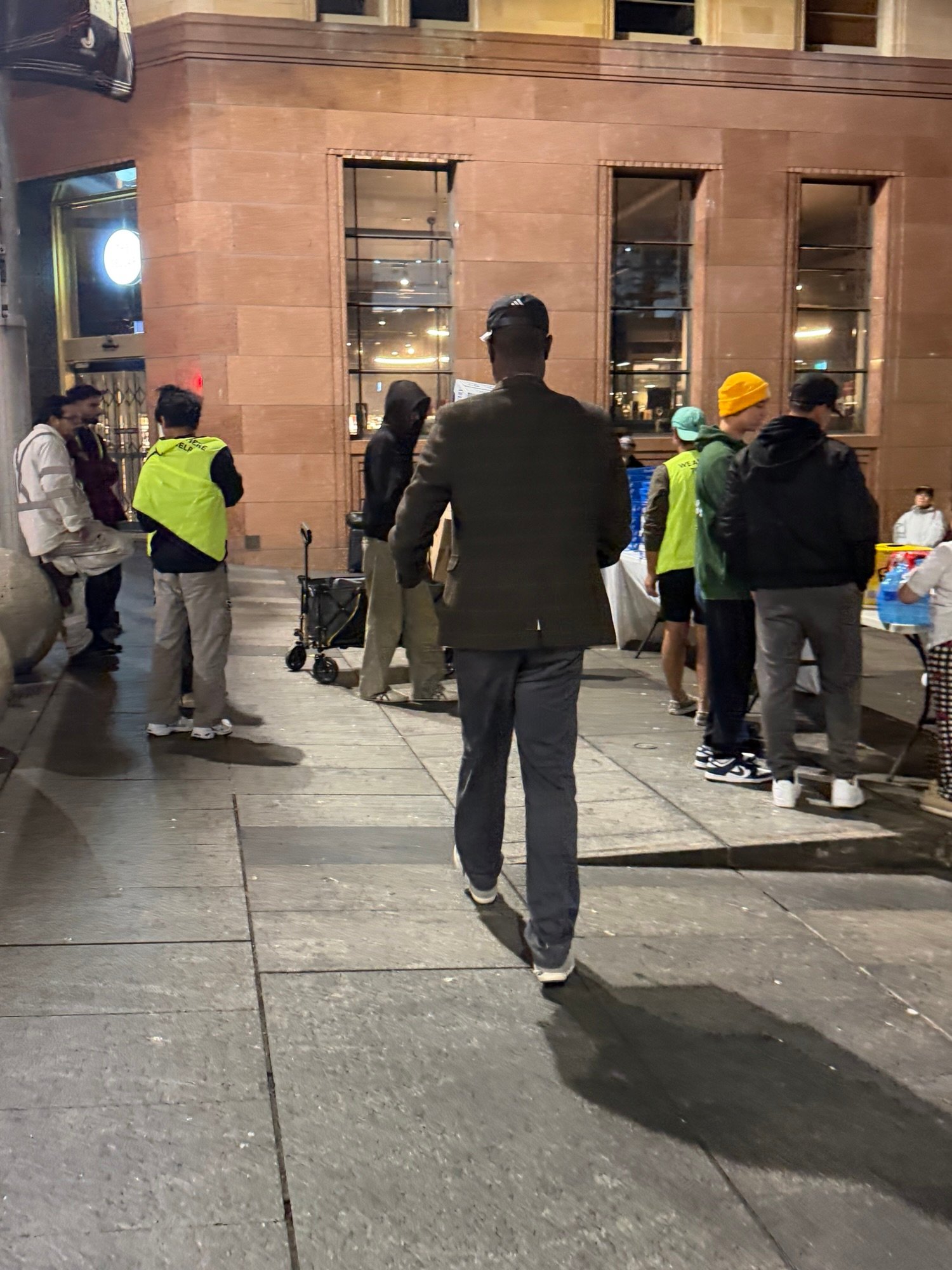
The Winter Drive led by the Indians in Sydney began its latest outreach across Sydney, distributing blankets, beanies, socks, slippers, and hygiene kits to people experiencing hardship.
But beneath the visible act of giving lies a deeper story one that connects directly to a growing and often misunderstood crisis: homelessness in New South Wales.
A crisis measured in numbers and lived in silence
According to the Australian Bureau of Statistics (ABS), more than 122,000 people were experiencing homelessness in Australia on Census night in 2021 .
New South Wales accounted for approximately 35,011 people experiencing homelessness in the same census period .
Behind these figures is a broader reality: homelessness is not only people sleeping on the streets. The ABS definition includes people living in severely crowded dwellings, boarding houses, or temporary accommodation without secure tenure.
In fact, only a small proportion are rough sleepers — around 3% of people experiencing homelessness in NSW, with most in insecure or overcrowded housing situations .
The Australian Institute of Health and Welfare (AIHW) adds another layer of insight: in 2023–24, around 280,000 people accessed specialist homelessness services across Australia, with demand continuing to rise year-on-year .
And increasingly, services are under strain. In NSW alone, about 59 people per day are turned away from homelessness services due to capacity limits, with nearly 40% of those cases linked to a lack of available accommodation .
These are not just statistics. They are indicators of a system under pressure and a community grappling with rising need.
Winter on the ground: where statistics become human stories
Against this backdrop, the Winter Drive takes shape not as symbolism, but as intervention small, immediate, and deeply human.
On the ground, volunteers describe moments that rarely appear in official reports: a person holding a blanket not just for warmth but for reassurance; conversations that last only a minute but carry emotional weight far beyond their duration; and the quiet dignity of people who, despite hardship, continue to show gratitude and resilience.
A volunteer reflected:
“You realise quickly that it is not just about what you give. It is about what people feel that they are seen.”
Each item distributed carried a meaning beyond material value. A beanie becomes protection from the cold. A hygiene kit becomes a restoration of dignity. A blanket becomes, in many cases, the difference between a night of suffering and a night of survival.
A system under strain
The context behind these moments is increasingly urgent.
Housing affordability pressures, rising rents, and limited supply have been widely identified as key drivers of homelessness growth across NSW.
Recent NSW Government data from the 2024 Street Count showed 2,037 people sleeping rough across the state, with regional areas experiencing sharp increases compared to previous years .
In 2025, the figure remained above 2,100 people sleeping rough, highlighting persistent pressure despite targeted interventions .
At the same time, homelessness services are reporting unprecedented demand, with frontline agencies describing systems that are “overwhelmed” and unable to meet growing needs consistently .
The result is a widening gap between need and capacity a gap increasingly filled by community-led initiatives like the Winter Drive.
Beyond relief: rebuilding connection
While the immediate focus is winter relief, this year’s initiative also reflects a shift toward longer-term thinking.
The “Reconnect Project,” launched alongside the Winter Drive, aims to collect old laptops from individuals and corporate partners, refurbish them, and redistribute them to people in need — including students, job seekers, and individuals rebuilding their lives.
In a society where digital access is essential for employment, education, and services, the absence of technology can deepen exclusion.
This initiative reframes donation not only as charity, but as participation in rebuilding opportunity.
It also invites corporate partners into a more active role not just funding support, but engagement on the ground, understanding lived realities, and contributing to systemic inclusion.
The unseen economy of kindness
One of the most consistent observations from volunteers is that community work rarely feels like a one-way act.
There is an exchange that happens quietly — not of material goods, but of perspective.
In giving, volunteers often describe receiving something harder to define: clarity, humility, and a renewed understanding of resilience.
In a city where homelessness is often discussed in policy language or statistics, these moments reintroduce something essential humanity.
A growing challenge, a collective responsibility
The scale of homelessness in Australia is widely recognised as a structural issue requiring long-term policy solutions, particularly in housing supply, rental affordability, and income support.
But alongside policy sits another reality: immediate human need.
Winter does not wait for reform.
And for that reason, community-led responses remain critical not as substitutes for systemic change, but as bridges that carry people through moments of crisis.
Looking ahead to Parramatta
The Winter Drive will continue across Sydney, with the next outreach planned for Parramatta.
Organisers are also calling on individuals and organisations to contribute — whether through donations, partnerships, or participation.
Because the need is ongoing. And so too must be the response.
A final reflection
In the end, winter reveals more than cold.
It reveals inequality. It reveals resilience. And, perhaps most importantly, it reveals the choices communities make when faced with vulnerability.
The Winter Drive led by the Indians in Sydney under Nadeem ahmed… is one such choice a reminder that even in the hardest conditions, connection is still possible.
And sometimes, that connection is the first step back toward hope