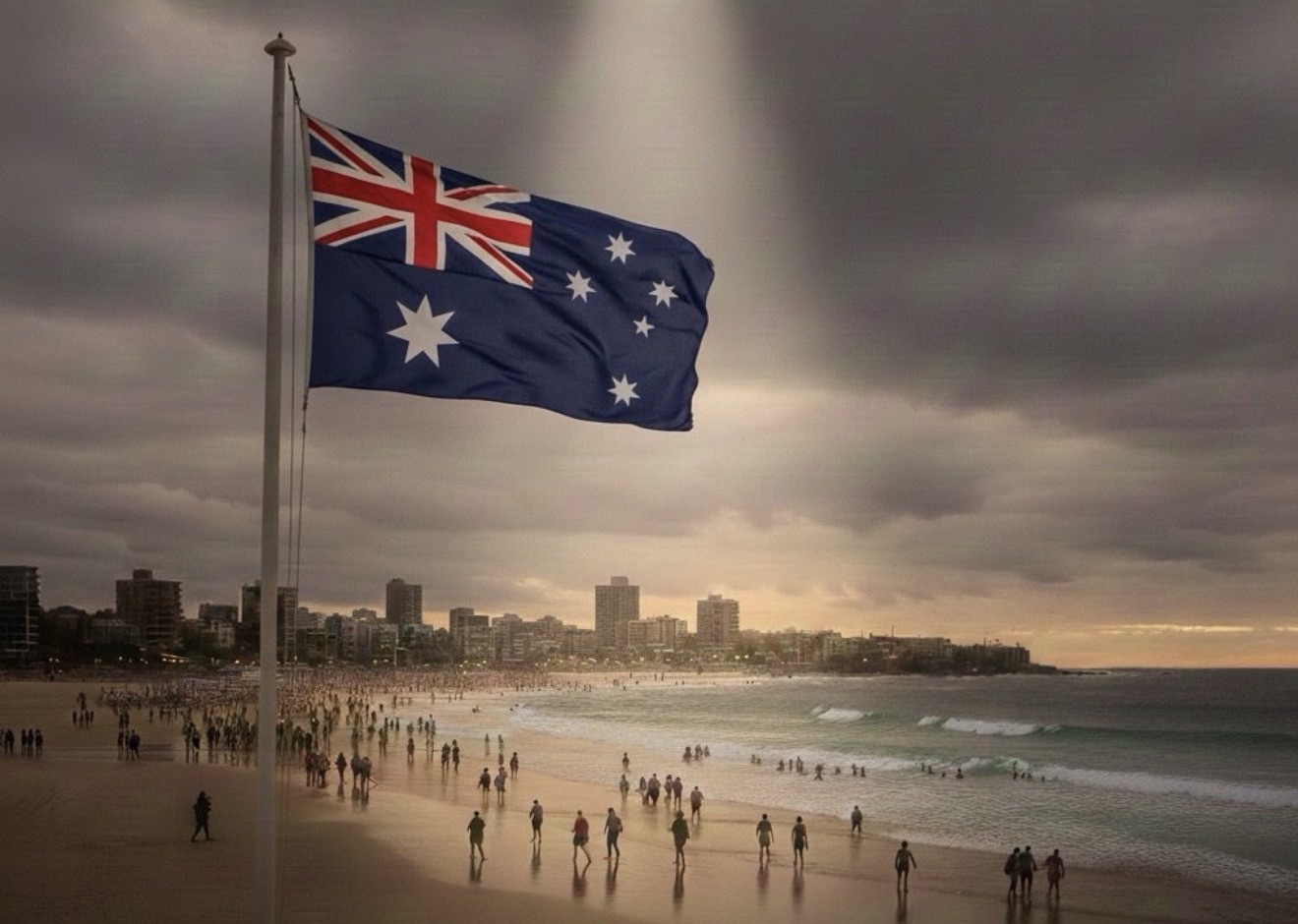
What should have been a peaceful, light-filled night of celebration turned into one of the most tragic evenings this nation has seen in decades. On Sunday, December 14, 2025, a religious and community event at Bondi Beach – the first night of Hanukkah – became the scene of a deadly terror attack, leaving lives shattered, families grieving, and Australia confronted with an act of hatred that shook the country to its core.
The event, called Chanukah by the Sea, drew hundreds of people – families, friends and community members – to celebrate the Jewish Festival of Lights. As the sun set over the iconic beach, gunfire erupted near the northern end of the shoreline, sending people fleeing in panic. Witnesses described hearing dozens of shots randomly raining down, turning a night of faith and joy into chaos.
By the time police and emergency services secured the scene, at least 12 people had been confirmed dead – including one of the gunmen – and nearly 30 others were injured, among them two police officers who had rushed in to save lives. Two suspects were taken into custody, and authorities have confirmed the incident as a terrorist attack aimed at the Jewish community.
A Tragedy That Defies Understanding
For Australians – long accustomed to relative safety and peace – Sunday’s events were nothing short of a nightmare. Moments meant to mark hope and resilience became scenes of horror and grief. Parts of Bondi Beach, usually filled with laughter and seaside joy, turned into zones of stretcher-carried victims and flashing emergency lights, with authorities urging anyone nearby to avoid the area as the investigation unfolded.
NSW Police Commissioner Mal Lanyon and other senior law enforcement officials immediately labelled the incident a terrorist attack, underscoring the methodical and deliberate nature of the shooting. While investigations continue into motive and background, current evidence points to this being an intentional assault timed to strike at a community gathering of faith. 
Eyewitness accounts paint a harrowing picture. One witness described the scene as “absolute hell on earth,” with people running to protect their loved ones, scrambling over barricades and desperately seeking safety. Another said he heard approximately 50 shots fired, each one echoing against the sandy shoreline as families huddled in terror.
Leadership Voices in a Time of Pain
In the hours that followed, Australia’s political leadership addressed the nation – not just with words of authority, but with heavy hearts.
Prime Minister Anthony Albanese condemned the attack as an “act of evil antisemitism”, stressing the shocking and distressing nature of the violence and assuring Australians that the federal government was working closely with state authorities to support victims and their families. He expressed deep sorrow for all those affected and vowed a unified national response.
In a powerful statement, NSW Premier Chris Minns said the reports and images emerging from Bondi were “deeply distressing”, urging the public to follow official guidance from police and emergency services. Minns acknowledged the deliberate targeting of the Jewish community and reiterated the commitment of state authorities to investigate and bring answers. 
Opposition Leader Sussan Ley spoke with emotion and solidarity. In her statement, she called the violence “hateful” and emphasised that Australians were in deep mourning as the nation grappled with the loss. Ley highlighted that the attack occurred during a celebration of peace and hope – a poignant contrast that left many reeling. She offered specific support to Jewish Australians and urged all Australians to remain united and follow the guidance of police and authorities.
Such leadership statements reflect not only political responsibility but the moral weight of this tragedy – a moment calling for unity, empathy and an unshakable commitment to principles of safety and mutual respect.
Community Response and Solidarity
Across Australia and the world, reactions poured in. Religious and community leaders – across faiths – extended condolences and reinforced the need to stand together against hatred. Muslim organisations in Australia issued statements condemning the violence and offering support to Jewish communities, asserting that no religion or group should ever face terror or discrimination.
International voices, too, echoed the pain. Leaders around the globe expressed sympathy and solidarity with Australians navigating this tragedy, underscoring that such attacks against one community are an attack against humanity itself. 
Within Sydney and across New South Wales, vigils and gatherings have already begun, with citizens coming together to mourn, to pray, and to show unwavering support for the victims and their families. Neighbourhoods have opened doors to those displaced, and community volunteers have offered aid to first responders and affected families – a testament to the power of collective compassion in the face of horror.
What This Means for Australia
For many Australians, the Bondi Beach terror attack is a jarring reminder that no society is entirely immune to the realities of hatred. Mass shootings on Australian soil have been rare since the transformative gun law reforms after the Port Arthur massacre in 1996, which dramatically reduced such events. Yet this attack – whether propelled by extremist ideology, antisemitism, or terror motives – marks one of the deadliest mass casualty events in decades.
The fact that this happened at a religious festival – during a time meant to celebrate light and resilience – makes the heartbreak even deeper. For Jewish Australians, the sense of violation and fear is profound. For all Australians, the incident is a collective trauma that demands courage, reflection and resolve.
Public conversations have already begun about the scourge of antisemitism, how communities can be better protected, and the role of government, civil society and grassroots networks in preventing future horrors. These discussions are necessary, painful, and urgent.
A Call for Unity and Healing
In the midst of grief, there are moments of profound humanity. Reports from the scene include accounts of bystanders risking their own safety to help the injured, strangers comforting the scared, and first responders braving danger to save lives. These acts of selflessness remind us that even in the darkest moments, the best of humanity still shines through. 
The Indian community in Sydney – stands in unwavering solidarity with Jewish Australians, and indeed with all those affected by this tragedy. Fear and hate do not discriminate; nor should compassion, support, and unity. We recognise that the grief felt by one community ripples across all of us. In sorrow, we are bound together. In hope, we must move forward together.
Honouring Lives, Renewing Purpose
As the investigation continues, we must remember the individuals whose lives were taken or forever altered on a night meant for celebration. Each name, each story, each family left grieving deserves remembrance, dignity, and justice.
Australia’s strength has always lain in its ability to come together in times of adversity – not with division, but with shared resilience and shared humanity. As we mourn those lost at Bondi Beach, let us also recommit to building a society where peace, safety and mutual respect are not just ideals, but lived realities.
May those we lost rest in peace.
May the injured find swift and full healing.
May we, as a nation and as neighbours, stand firm against hatred and stand together in solidarity, compassion, and hope.