
The Sydney Cricket Ground (SCG) woke up on the third morning of the new year like a grand old theatre waiting to host its most dazzling act. Draped in hues of pink, the iconic venue was more than just a cricket ground. It was a canvas where stories of grit, passion, and unity would be painted. The Pink Test, an annual collaboration between Cricket Australia and the McGrath Foundation, stood as a tribute to breast cancer awareness and those whose lives it has touched.
The SCG, buzzing with 30,000+ fans clad in pink wigs, scarves, and jerseys, was not just a cauldron of cricketing fervor—it was a symbol of hope. But amid the applause for breast cancer survivors and Glenn McGrath’s heartfelt words, the murmur of an impending cricketing battle grew louder.
Australia and India—two titans of the sport—stepped onto the field. The stakes were monumental: pride, legacy, and the coveted Border-Gavaskar Trophy.
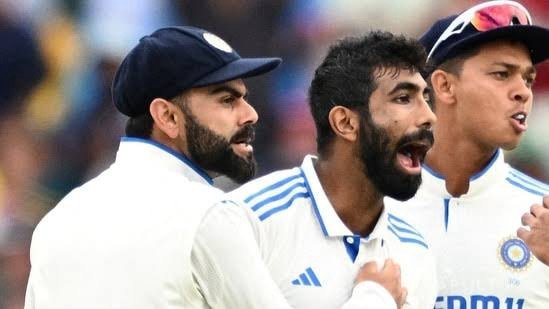
Day 1: Bumrah’s Symphony
Jasprit Bumrah doesn’t bowl deliveries; he composes symphonies. His angular run-up, his whip-like arm, and the ball that sings through the air—it’s artistry in motion. The Indian pace maestro was at his brilliant best on the opening day.
With the SCG pitch offering a tantalizing balance of pace and bounce, Bumrah toyed with Australia’s top order. Usman Khawaja’s defense was breached by a delivery that curved like a violin string, sending the off-stump cartwheeling.
The SCG crowd, a sea of pink and gold, roared. But it wasn’t all rosy. Sam Konstas, Australia’s young hope, pushed back with defiance. Yet even he couldn’t escape Bumrah’s intensity. A fiery stare after his dismissal hinted at the intensity of the battle ahead.
By the end of Day 1, the scorecard painted a grim picture for Australia, but the SCG buzzed with optimism. Cricket’s greatest rivalries are never short of surprises.
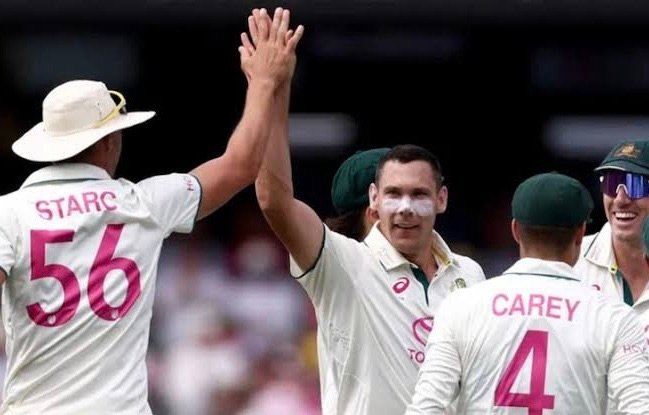
Day 2: The Pant and Boland Show
The next morning began with a bang—literally. India’s flamboyant wicketkeeper Rishabh Pant strode to the crease as if the SCG was his backyard. The first ball he faced, a nonchalant flick over fine leg, left the crowd gasping.
Pant didn’t play cricket; he performed. In a dizzying 29-ball fifty, he turned the SCG into his stage. When he lofted Scott Boland into the stands, even Sunil Gavaskar couldn’t contain himself. The legendary batter, perched in the commentary box, was soon caught dancing on the big screen, his infectious joy a reflection of the Indian fans in the crowd.

But cricket, ever the equalizer, struck back through Boland himself. In a spell of breathtaking precision, he dismantled India’s middle order. Virat Kohli, India’s talisman, fell to a searing delivery that jagged in sharply, leaving him momentarily stunned.
The SCG, now engulfed in drama, was alive with every ball bowled. Pant’s fireworks had given India hope, but Boland ensured Australia wasn’t out of the fight.

Day 3: The Decisive Act
The final day of the Test dawned with the SCG crowd swelling in anticipation. Australia needed a modest target to reclaim the Border-Gavaskar Trophy, but nothing about this match had been straightforward.
Steve Smith, the maestro of the Australian batting lineup, had a stage set for a grand milestone—just one run away from 10,000 Test runs. But cricket, a game that thrives on irony, had other plans. A rising delivery from Mohammed Siraj kissed the shoulder of Smith’s bat, ballooning into the hands of a diving Yashasvi Jaiswal.
Smith’s dismissal left the SCG stunned. For a moment, the pink stands seemed to lose their color. Yet, the Australian faithful erupted in applause, their respect for their hero unwavering.
Enter Sam Konstas, the prodigy thrust into the spotlight. His intent was clear: seize the moment. But cricket, unforgiving in its lessons, struck again. A wild swing sent the ball soaring into the Sydney sky, only to land safely in mid-off’s hands.
The SCG crowd sighed in unison. Konstas walked back, head bowed, and the weight of expectation heavy on his young shoulders. Yet the applause that followed reminded him—and everyone—that cricket is as much about resilience as it is about skill.
Australia’s bowlers, led by Pat Cummins and Boland, then took center stage. They tore through India’s tail with ruthless efficiency, each wicket met with a roar that reverberated across the SCG.
And just like that, it was over. The scoreboard flashed Australia’s victory, a moment ten years in the making. The Border-Gavaskar Trophy, fiercely contested and cherished, was back in Australian hands.
The SCG, bathed in the fading light of a Sydney summer, stood witness to history. For India, it was a bitter pill—a fortress breached. But for Australia, it was redemption.
Much will be said about India’s performance. Virat Kohli and Rohit Sharma, the faces of Indian cricket, will be at the center of every analysis. But their role, much like corporate executives, isn’t to deliver runs every match. They strategize, inspire, and lead—a task far more complex than it appears.
The true blame lies in the middle order—the middle management, if you will. Cricket is a team game, and the lack of collective execution was India’s undoing.

More Than Cricket
What made this Test extraordinary wasn’t just the cricket. It was the cause it supported. The McGrath Foundation’s work, highlighted by the Pink Test, transcends the boundaries of the sport.
As breast cancer survivors walked onto the field to share their stories, the crowd stood in applause. Glenn McGrath, ever gracious, reminded everyone of the power of sport to unite, inspire, and heal.
This Test was a reminder of why we love cricket. It’s not just about runs or wickets; it’s about moments that stay with us, stories that touch us, and causes that move us.
The Sydney Cricket Ground has witnessed countless moments of cricketing brilliance, but this Test will be etched in its history. For three days, the SCG was more than a stadium—it was a stage for heroes, a sanctuary for hope, and a theatre of dreams.
As the players left the field and the crowd slowly dispersed, the echoes of applause lingered. This was a match that transcended sport, a story that will be told and retold for years. It wasn’t just cricket—it was magic.