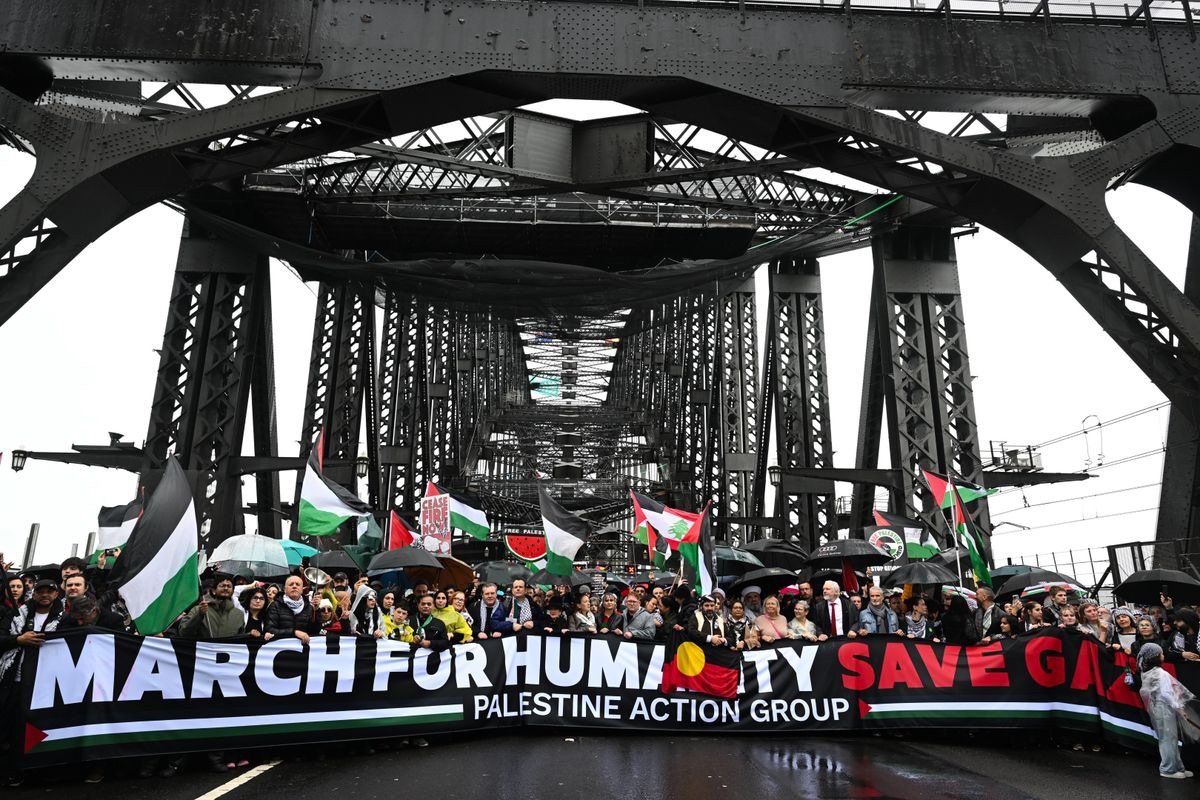
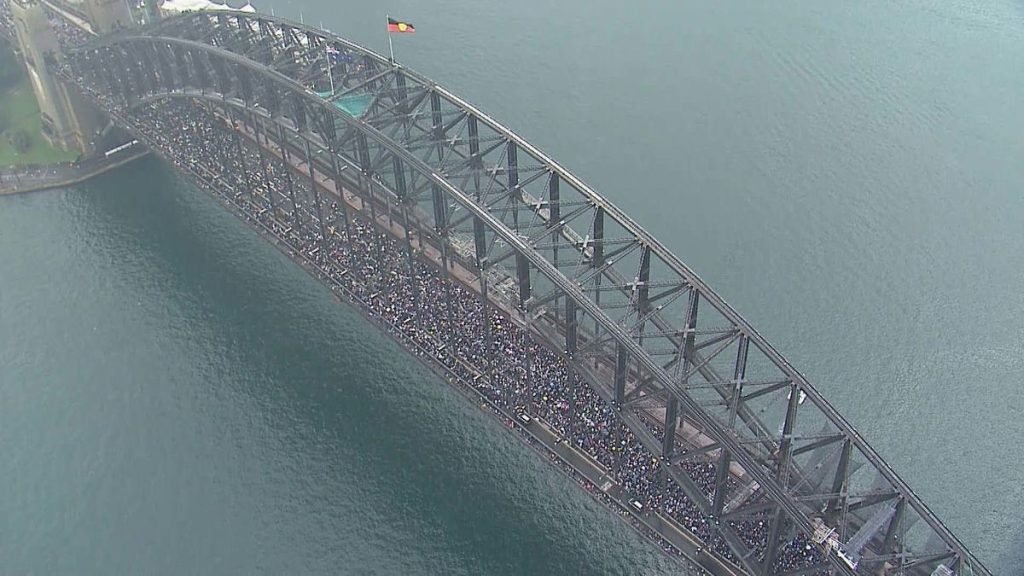
Sydney, August 3, 2025 — In a moment that felt like both reckoning and rebirth, tens of thousands of Sydneysiders gathered in the pouring rain to walk across one of the world’s most iconic structures, the Sydney Harbour Bridge. Braving wind and water, umbrellas and waterproof prams in hand, men, women, children, and elders from diverse faiths and backgrounds formed a living tapestry of solidarity—demanding an end to suffering in Gaza.
A Symbolic Stand: Why the Bridge?
The choice of the Harbour Bridge was deliberate. Protest organisers, led by the Palestine Action Group, described it as “Australia’s most iconic symbol”—a landmark designed to send a global message about famine and displacement in Gaza. With mass starvation now reportedly threatening millions in the Gaza Strip, the group sought to amplify a humanitarian plea on the world stage .
Before the march, organizers applied to police for approval to close the bridge. NSW Police, citing short preparation time and substantial safety risks, declined. The Palestine Action Group responded by securing a court ruling from the NSW Supreme Court, which granted the march permission to proceed .
Rain, Resolve, and Remarkable Numbers
Despite torrential rain, the streets leading to the bridge were alive—umbrellas bloomed, ponchos rustled, and along came mothers pushing prams and even one man carrying a surfboard, an iconic nod to Sydney’s culture . Estimates of turnout varied, with police placing numbers at 90,000–100,000, while organisers suggested figures as high as 300,000 . Yet irrespective of the headcount, one thing was clear: it became Sydney’s largest protest in recent memory .
Organisers called it a “March for Humanity”, urging action for a ceasefire and international support to Gaza. At least 1,100 extra police officers were deployed, including specialist units, and the event carried an estimated monitoring cost of AUD 1.4 million. Even so, the march remained peaceful—no arrests, no injuries reported—and authorities commended how well-behaved the crowd was .
From Safety Risk to Shared Purpose
The sheer volume of people in a confined space did raise serious concerns. Around mid-march, NSW Police issued a public safety alert, directing the crowd to turn back to Wynyard to avoid a possible crush. Protesters complied without incident, receiving those instructions via text messages while helicopters hovered overhead .
Acting Deputy Commissioner Peter McKenna later reflected: “I wouldn’t like to try and do this every Sunday … we’re very lucky today that the crowd was well behaved.” He described it as the largest demonstration he has seen in Sydney .
Civic and Political Voices: Compassion in Rain-Drenched Grit
The crowd was diverse and resolute: several NSW and federal Labor MPs—including Ed Husic, Penny Sharpe, Jihad Dib—and Greens leaders joined the march. Notably, Lord Mayor Clover Moore stood among the demonstrators and called the bridge march “an incredibly powerful symbol” of community sentiment .
Ed Husic, son of immigrant parents and former federal minister, spoke directly to the mounting humanitarian tragedy: while acknowledging Hamas’s culpability in the October 7 attacks and the need to address violence against Israelis, he underscored that over 60,000 Palestinians—including children and women—have died amid sustained bombardment. Aid remains severely constrained, though an Australian package of $20 million is helping deliver limited relief .
Other significant voices included the Jewish Council of Australia’s Sarah Schwartz, who urged moral leadership, and Julian Assange, who held a sign reading “March for Humanity Save Gaza” alongside students, retirees, and grandparents united in grief and purpose .
A Universal Cry: Pots, Pungent Silence, and Shared Humanity
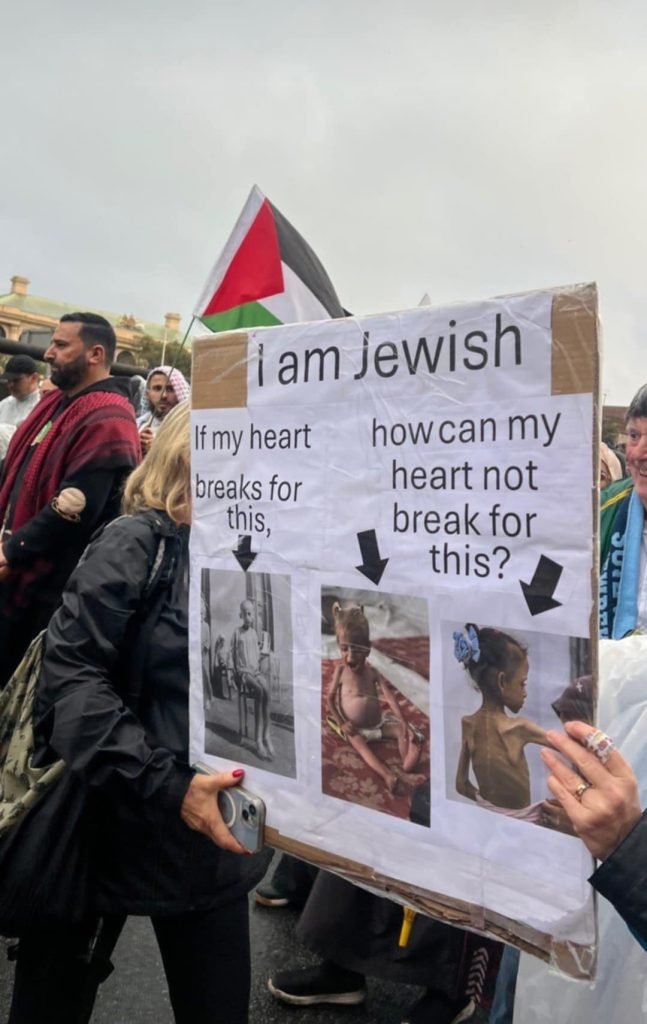
What resonated most were the human gestures. Marchers carried homemade signs. Pots and pans rang in empty pots—an audible plea for food, dignity, and awareness. Children raised voices chanting slogans like “Free Palestine” and “Ceasefire Now.” A young girl, Maila, said, “I’m speaking out for the Palestinian kids like me, and for all of Palestine because of the war that’s been going on right now.” Beneath grey skies, small voices were amplified into a call for peace and justice .
Witnesses and participants described the scene as “history in the making”. One father, Ali, carried his daughter Aaliyah on his shoulders flanked by placards; she called out “Free Palestine” while painted in the colours of the Palestinian flag. A day of rain became a baptism of compassion.
What We Carry Forward
In under two years, pro-Palestinian demonstrations have taken root across Australian cities—from encampments at universities to blockades at ports. But this was the first time the Harbour Bridge stood enveloped by bodies and banners. Across time and tide, it may well be remembered as a day when city infrastructure became the spine of collective conscience .
Rain drenched shoes. Muffled chants echoed across steel. Yet something more vital was drenched in those acts: empathy. At its core, the march was not about geopolitical posturing—it was about mothers, children, elders, neighbors, and newfound friends choosing humanity above politics.
As the last of the banners were folded and the bridge reopened around 5 p.m., protestors dispersed peacefully despite congested transport. The sky may have wept, but hearts were full. They had stood not in anger, but in sorrow and determination .
This blog is for every person in Sydney—and in Australia—who seeks peace. We don’t come together offering solutions or proclaiming stances. We come together, humbly, to bear witness to grief and hope. We come together to listen.
Because in the end, you don’t need to belong to a cause to demand compassion. You just need to belong to humanity.