Voting for the first time in Australia can feel like a big step—especially for new citizens and migrants who have recently joined the nation’s democratic process. But the experience doesn’t need to be daunting. With the 2025 Federal Election happening on Saturday, 3 May, it’s time to understand how this process works and how you can make your voice count.
We are pleased to present this clear, step-by-step guide for first-time voters—especially members of our Indian-Australian community in New South Wales.
Why Voting Matters
Australia’s system of government is a representative democracy. Every citizen’s vote helps decide:
Who will represent your local community in parliament; Which party will form government and lead the nation; What policies and values shape our future.
By voting, you become part of shaping Australia’s story. It’s more than a right—it’s a responsibility.
Step 1: Enrolment and Eligibility
Before anything else, you must be enrolled to vote. Voting is compulsory in Australia for citizens aged 18 and over.
You can check your enrolment at www.aec.gov.au. For this election, enrolments closed on Friday, 28 March 2025.
Step 2: Decide How and When to Vote
You have three options:
Vote on Election Day – Saturday, 3 May, from 8:00 AM to 6:00 PM at your local polling booth. Vote early – If you’re travelling or unavailable, early voting opened on Monday, 22 April and closes on Friday, 2 May. Vote by post – Postal vote applications closed on 30 April.
To find your nearest polling place, visit the AEC website’s polling place locator.
Step 3: Understand the Two Ballot Papers
On election day, you’ll receive two ballot papers—a green one and a white one.
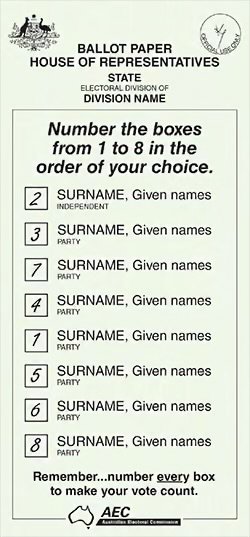
1. Green Ballot Paper – House of Representatives (Lower House)
What it decides: This is where you vote for a candidate in your local electorate. The party that wins the majority of the 151 seats in the House of Representatives forms government.
- Green Ballot Paper – House of Representatives (Lower House)
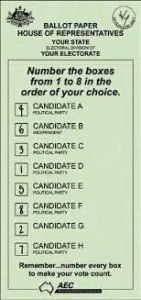
The green paper lists all the candidates. You must number every box (1, 2, 3, etc.) in the order of your preference. Do not use ticks or crosses. Your first preference (number 1) should go to the candidate you most support.
Tip: If you make a mistake, just ask for a new paper.
2. White Ballot Paper – Senate (Upper House)
What it decides: The Senate reviews and debates laws. Each state, including NSW, elects 12 senators. There are two ways to vote on this paper:
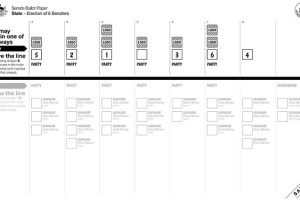
Option A – Above the Line:
Number at least 6 boxes for parties or groups in order of preference.
Option B – Below the Line:
Number at least 12 individual boxes for candidates in order of preference.
Choose only one method—either above the line or below the line.
Step 4: Complete Your Vote
Mark your ballot papers correctly and completely. Fold each paper and place them in the correct ballot box—green for the House, white for the Senate. That’s it—you’ve voted!
Step 5: Get Help if You Need It
You don’t have to do this alone.
Polling officials at the booths are trained to assist all voters, including those needing help due to language or accessibility issues. Practice ballots and videos are available at www.aec.gov.au.
A Note to First-Time Indian-Australian Voters
Our community has always believed in the power of democracy—from the world’s largest democracy in India to the vibrant system here in Australia. Participating in an election is your chance to be heard and to shape the kind of country we all want to live in.
Don’t let uncertainty stop you from taking part. Read. Learn. Ask questions. Make your choice count.
Final Reminder: It’s Compulsory
If you’re enrolled and don’t vote, you may receive a fine. More importantly, you miss the chance to help decide Australia’s future.
Resources
Australian Electoral Commission (AEC): www.aec.gov.au Voting FAQs: How to vote Practice Ballots: Try it here
We encourage every eligible member of ‘Indians in Sydney’ to vote with confidence and pride. Together, let’s show that our community is informed, engaged, and committed to building a better Australia for all.