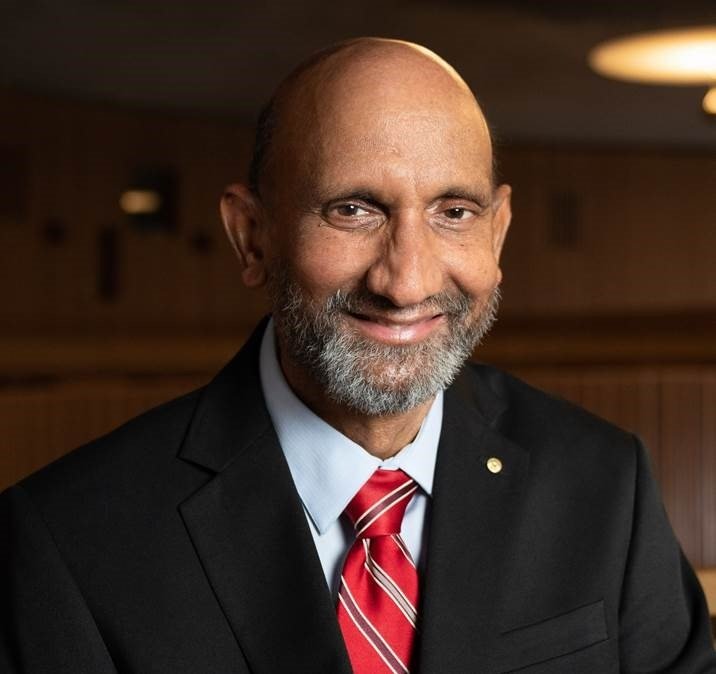
In a world often dazzled by instant success and fleeting fame, the life and legacy of Emeritus Professor Chennupati Jagadish offer something different: a story of grit, quiet brilliance, and unwavering commitment to science and humanity.
Earlier this year, Professor Jagadish added yet another crowning jewel to his illustrious career—he was elected as a Fellow of the Royal Society (FRS), one of the most prestigious honours a scientist can receive. Founded in 1660, the Royal Society of London is the world’s oldest national scientific institution. To be named a Fellow is to join the ranks of icons like Isaac Newton, Charles Darwin, and Stephen Hawking. For Jagadish, the honour is humbling:
“I am humbled and grateful for the honour of being elected as a Fellow of the Royal Society of London.”
But behind this recognition lies a journey as inspiring as it is improbable.

Humble Beginnings, Limitless Dreams
Professor Jagadish was born in a small village in India where electricity was a luxury and opportunities were scarce. He studied by the light of a kerosene lamp, driven by an unquenchable thirst for knowledge. The village didn’t have a high school, so he moved to a neighbouring one and lived with his mathematics teacher for three years.
It was this combination of determination, curiosity, and mentorship that sowed the seeds of a career that would eventually help redefine the boundaries of modern science. Today, Jagadish is internationally recognised as a pioneer in nanotechnology and semiconductor optoelectronics. He has spent the past 35 years at the Australian National University (ANU), where he is now an Emeritus Professor of Physics and Electronic Materials Engineering.
Mastering the Science of the Minuscule
Jagadish is an expert in manipulating matter at the nanoscale—a domain so small that 30 of his advanced semiconductor devices can fit across the width of a single human hair. His work has significantly advanced the technology behind LED lights, lasers, and other semiconductor devices that now form the backbone of modern electronics.
“Success, for me, is secondary,” he often says. “But seeing their success is what makes me happy.”
That quote reveals much about the man. Beyond his groundbreaking research, it’s his role as a mentor and educator that he treasures most.
He has published more than 790 peer-reviewed journal articles, served as Editor-in-Chief of Applied Physics Reviews, and sits on the editorial boards of 20 academic journals. His influence stretches far beyond Australia. He is a fellow or foreign fellow of 16 science and engineering academies across Australia, the United States, the UK, Europe, China, and India.
Science for Humanity: A Global Perspective
While the accolades are impressive—the IEEE Nanotechnology Pioneer Award, UNESCO Medal for Nanoscience, ARC Federation Fellowship, and the Pravasi Bharatiya Samman award from the President of India in 2023, to name just a few—Jagadish has never lost sight of the broader purpose of science.
As President of the Australian Academy of Science, a role he assumed in 2022, he has taken an active stance in shaping national and global science policy. He uses his position to champion diversity in STEM, science diplomacy, and equitable access to education.
His sense of social responsibility is perhaps best exemplified in the Future Research Talent (FRT) program at ANU. Together with his wife Vidya, he donated $140,000 to establish the initiative, which supports students from developing countries to study and conduct research at ANU. Their initial gift inspired further contributions, growing the fund to $1 million.
A Fellowship of Scientific Giants
The Royal Society’s announcement earlier this year featured a roster of scientific heavyweights. Jagadish was one of four Fellows from the Australian Academy of Science to be elected. The others were:
- Professor Melissa Little, a leader in stem cell medicine and renal regeneration;
- Professor Bill Laurance, a pioneer in conservation science;
- Professor Hugh Possingham, a mathematical ecologist tackling the biggest questions in biodiversity and sustainability.
Jagadish stood out not just for his scientific achievements, but for his holistic contribution—a rare fusion of academic brilliance, mentorship, science diplomacy, and philanthropy.
The Royal Society noted that he was elected “for playing a pivotal role in shaping science policy in Australia, advancing the field both nationally and globally, and for his pioneering contributions to semiconductor optoelectronics and nanotechnology.”
An Icon for the Indian Diaspora in Australia
For the Indian community in Australia—and particularly for the vibrant network of Indians in Sydney—Professor Jagadish is more than a scientist; he is a symbol of perseverance, excellence, and cross-cultural contribution.
Despite his global stature, he remains grounded and accessible. His commitment to community engagement is evident in his ongoing support for events that celebrate India’s heritage while embracing Australia’s diversity. He joined us at last year’s Indians in Sydney Gala Dinner, and his warm presence and words of encouragement left a lasting impression.
As we prepare for the 2025 Gala Dinner, we look forward to welcoming him once again—and celebrating not just his recent Royal Society Fellowship, but the decades of dedication that led to it.
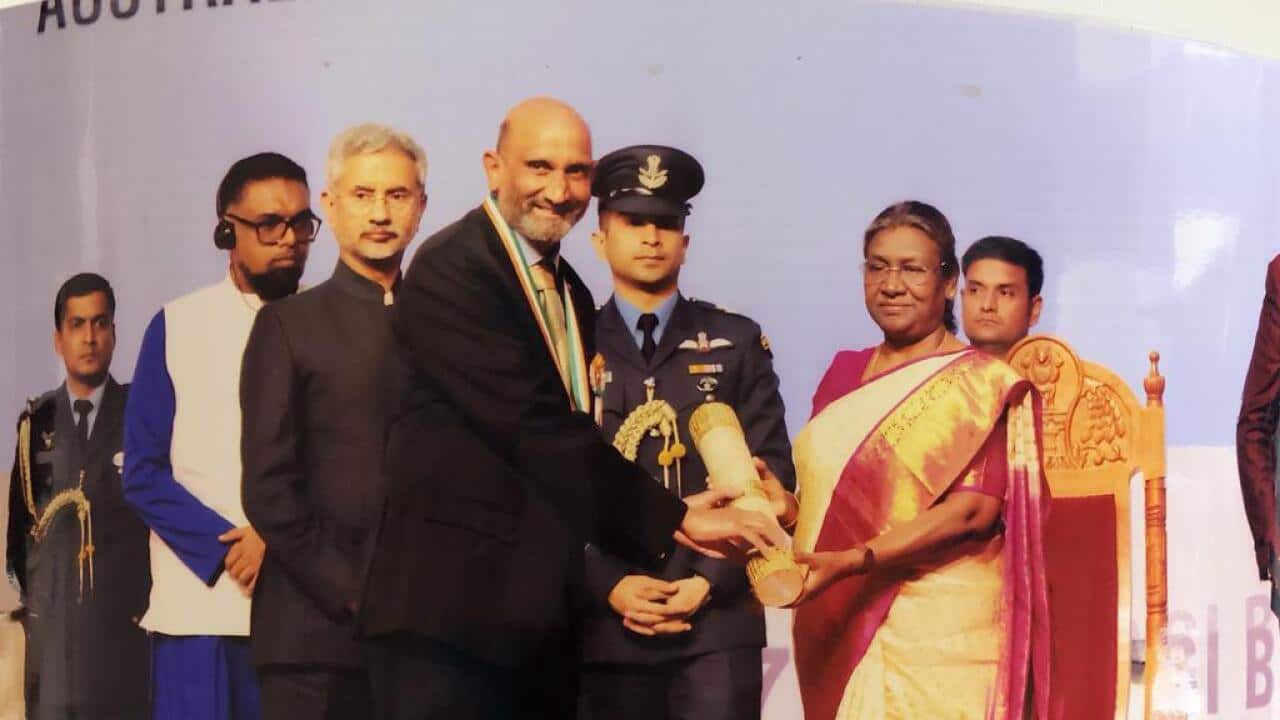
His work has earned him an extraordinary array of accolades Including In 2023, he was honoured with the Pravasi Bharatiya Samman Award, the highest award given to overseas Indians by the President of India, for his outstanding contribution to science, technology, and education.
A Legacy Still in Motion
Jagadish’s work continues. At 65, he remains an active researcher, mentor, and advocate. He frequently travels to conferences, mentors young scientists, and collaborates on international projects. Yet he also makes time to reflect, to give back, and to plan for the next generation of scientists.
His story, rooted in a humble Indian village and reaching the heights of international acclaim, is not just a tale of personal triumph. It is a powerful reminder of what is possible when opportunity meets talent—and when science is used not just to understand the world, but to improve it.
In His Own Words
In a recent interview, when asked what continues to drive him, Jagadish said:
“I believe science is not just about discovery—it’s about lifting others up. If my journey can inspire even one student from a small village to dream big, then everything I’ve done is worth it.”
Indeed, it is. And for that, we honour Professor Chennupati Jagadish—not just for what he has achieved, but for who he is.