Inside the Interfaith Gathering That Brought NSW Together at Parliament
14th of May, at the Parliament of New South Wales, something rare happened.
In a world increasingly shaped by division, outrage, and uncertainty, a room full of people from different faiths, backgrounds, cultures, and political perspectives came together not to argue, not to compete, and not to amplify differences — but to listen.
For one evening, dialogue replaced division.
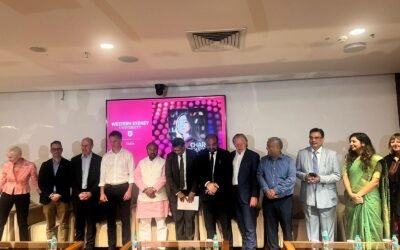
The Shared Future – Interfaith Collaboration for Peace and Prosperity in NSW, convened by Indians in Sydney, brought together Members of Parliament, faith leaders, human rights advocates, academics, multicultural organisations, and community leaders for an evening focused on one powerful idea:
Interfaith dialogue is not a luxury — it is a necessity.
The gathering was hosted at the Parliament of New South Wales by Warren Kirby MP, whose warmth, humility, and genuine commitment to inclusion set the tone for the evening. In many ways, the event reflected the very best of multicultural Australia — people from vastly different lived experiences sharing one room with openness, dignity, and mutual respect.
And perhaps that is what made the evening feel so important.
Because beyond speeches and formalities, there was a deeper message present throughout the night:
that social cohesion cannot be taken for granted. It must be intentionally built, protected, and nurtured.
The evening began with a moment of silence in remembrance of the Bondi tragedy — a quiet but deeply moving reminder of our shared humanity and collective vulnerability. In that moment, the room stood united. Faith leaders stood beside politicians. Community advocates stood beside corporate professionals. Different beliefs, different backgrounds, one silence.
It was a powerful reflection of the Australia many people still believe in.
The event was masterfully guided by emcee Ekta Sharma, whose grace, professionalism, and warmth carried the evening with authenticity and calm. Her ability to connect the room and maintain the spirit of the gathering added a deeply human touch to the program.
Among the evening’s distinguished attendees was the Honourable Chris Minns MP, Premier of New South Wales, whose reflections on inclusion, belonging, and social cohesion resonated strongly with the audience. His remarks reinforced the importance of creating a state where diversity is not simply acknowledged, but genuinely embraced.
Also present were leaders from across the political spectrum including Mark Coure MP, Shadow Minister for Multiculturalism, Gurmesh Singh MP, Donna Davis MP, Nathan Hagarty MP, Tim James MP, Charishma Kaliyanda MP, Hugh McDermott MP, and Jacqui Munro MLC, reflecting a bipartisan recognition of the importance of multicultural harmony and interfaith collaboration in modern Australia.
In a time where public discourse is often polarised, the willingness of leaders from different political backgrounds to stand together in support of dialogue sent a meaningful message in itself.
But what truly elevated the evening were the conversations.
The keynote addresses brought together powerful perspectives on peacebuilding, leadership, human rights, and the future of multicultural societies.
Steve Killelea A.M., founder of the Institute for Economics and Peace, reminded the audience that peace is not simply an abstract ideal — it is measurable, achievable, and deeply connected to the wellbeing of communities and nations. Through initiatives such as the Global Peace Index, his work has transformed how governments and institutions around the world understand stability, resilience, and conflict prevention.
His message was clear: sustainable peace requires collaboration, trust, and long-term thinking.
Dr. Jane Fulton spoke with compassion and insight about leadership, humanity, and the responsibility institutions hold in shaping inclusive societies. Her reflections emphasised the importance of empathy, ethical leadership, and ensuring that diversity remains a strength rather than a point of division.
Meanwhile, Ahmet Orhan Polat offered thoughtful reflections on intercultural dialogue and the importance of building genuine human connections across communities. His perspective reinforced the idea that understanding begins not through grand statements, but through simple, meaningful conversations.
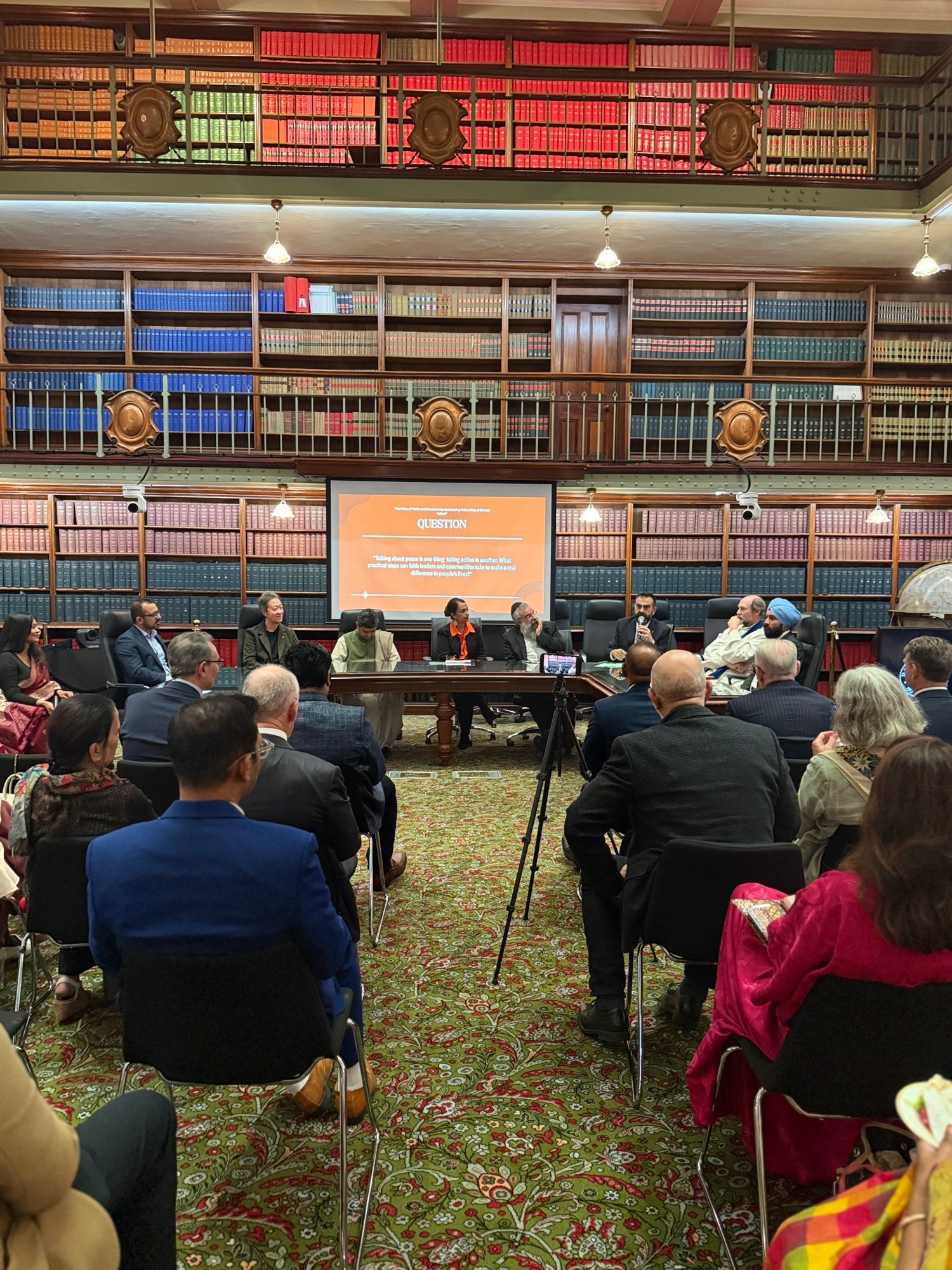
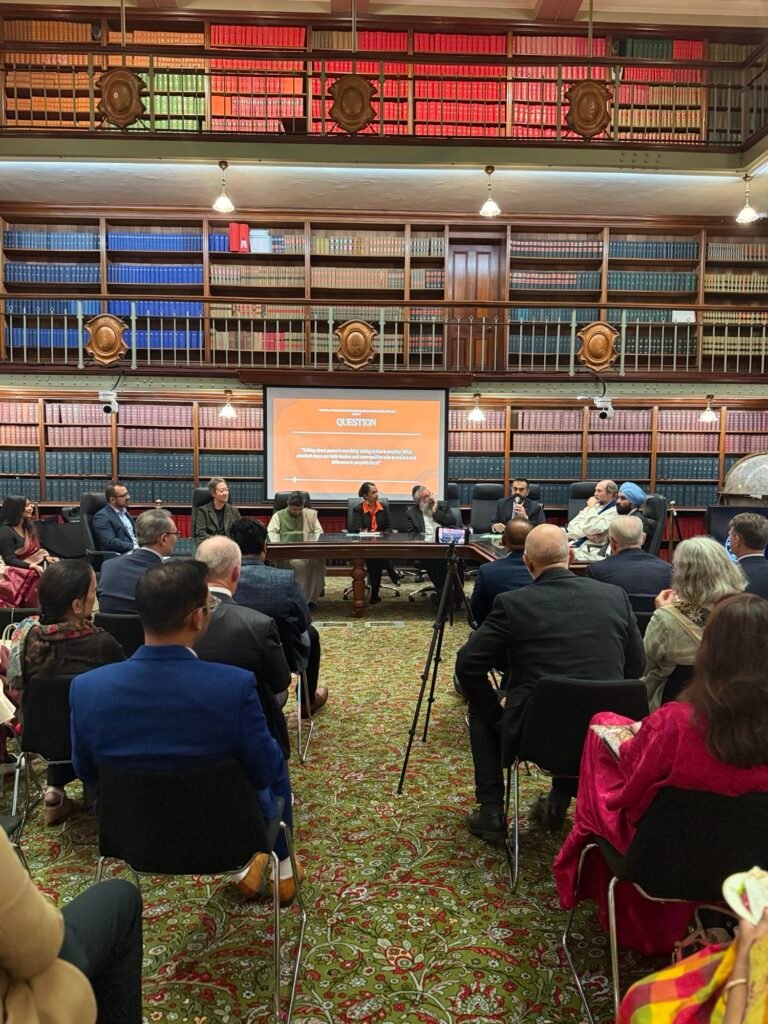
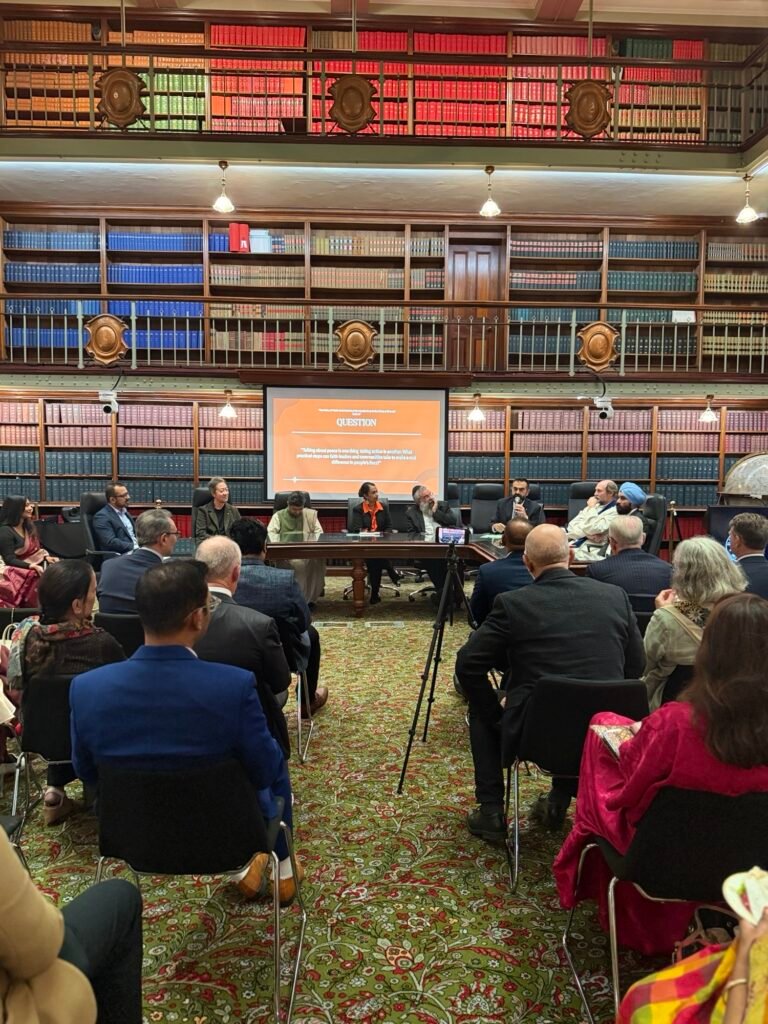
Yet perhaps the most impactful part of the evening was the interfaith panel discussion itself.
Bringing together voices from Jewish, Muslim, Hindu, Christian, Sikh, and broader community backgrounds, the panel explored some of the most pressing questions facing modern multicultural societies:
How do we strengthen social cohesion?
How do communities move beyond tolerance toward genuine understanding?
And how do we ensure dialogue leads to real action?
Panelists including Melissa Monteiro, Gurnam Singh, Pandit Jatin Kumar Bhatt, Paul Sedrak, Dr. Ali Alsamail, Rabbi Dr. Dovid Slavin, and Rev. Geoff shared deeply personal and practical reflections drawn from years of community service, spiritual leadership, and grassroots engagement.
The discussion was expertly moderated by Nandini Sen Mehra, whose thoughtful facilitation allowed the conversation to remain honest, balanced, and deeply engaging.
One theme emerged repeatedly throughout the evening:
Strong communities are not built by erasing differences.
They are built by learning how to navigate differences with respect.
That idea appeared to resonate strongly throughout the room.
There was no sense of performance or political theatre. Instead, there was sincerity — leaders speaking openly about challenges, communities reflecting on shared responsibility, and people genuinely listening to one another.
And that may be why the event left such a strong impression on attendees.
For Indians in Sydney, the evening represented more than a successful gathering. It reflected years of community-building work focused on creating meaningful connections across cultures and communities.
Founded with the vision of connecting and supporting people, Indians in Sydney has evolved into one of Australia’s largest and most influential multicultural community platforms. But beyond numbers and reach, events such as The Shared Future demonstrate a broader purpose — using community influence to create spaces for dialogue, understanding, and social impact.
At a time when societies around the world are grappling with increasing polarisation, misinformation, and social fragmentation, initiatives like this serve as an important reminder that another path remains possible.
One built on listening.
One built on empathy.
One built on human connection.
Perhaps the most powerful moment of the evening came not during a speech, but during a quiet reflection near the close of the event.
As faith leaders spoke briefly about what peace meant within their own traditions, the similarities were impossible to ignore. Different words. Different histories. But remarkably similar values — compassion, dignity, service, kindness, humanity.
It was a reminder that while faiths may differ in practice, many ultimately seek the same thing: a better world for future generations.
And perhaps that is the real significance of evenings like this.
Not that they solve every challenge overnight.
But that they create something increasingly rare in modern society:
the willingness to sit together and genuinely see one another as human beings first.
As the evening concluded, one message remained clear.
The future of multicultural Australia will not be built through silence, fear, or division.
It will be built through courageous conversations, inclusive leadership, and communities willing to walk forward together despite their differences.
Many faiths.
One shared future.