
Australia is at a pivotal moment in its multicultural journey. With the recent release of Understanding Australia’s Indian Communities: A...
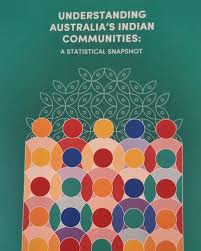

Australia is at a pivotal moment in its multicultural journey. With the recent release of Understanding Australia’s Indian Communities: A...

💡 Did You Know You Might Be Paying Too Much for Your Energy? Most people don’t realise they’re overpaying for electricity, gas, or...
In Australia today, we often hear about the beauty of our multicultural society — a place where people from different backgrounds live,...
Under the amber glow of Haldon Street, the air is thick with a scent that has become the unofficial perfume of a Sydney autumn: charcoal-grilled lamb, sweet rosewater, and the earthy, unmistakable musk of camel burgers.
It is 9:30 PM on a crisp March evening in 2026. For a 42-year-old mother of three from Parramatta, the hour marks the beginning of a second day. After a full shift in corporate logistics and a quiet iftar at home, she has traveled across the city to stand in a twenty-minute queue for Knafeh.
“There is a specific kind of exhaustion that comes with Ramadan in a fast-paced city like Sydney,” community member says, balancing a steaming tray of the cheese-filled pastry. “But there is also a specific kind of magic. When you stand here in Lakemba, you aren’t just a ‘migrant’ or an ‘employee.’ You are part of a heartbeat. You see the same faces you’d see in a bazaar in Dhaka or a street in Hyderabad, all of us chasing the same moon.”
she is one of an estimated 1.4 million visitors expected to descend upon Lakemba Nights by the time the festival concludes on March 15. But in 2026, the story of Ramadan in New South Wales is about more than just food; it is a story of how a community anchors itself during a period of intense physical and structural change.
This year, the pilgrimage to the heart of the celebrations requires more than just an appetite—it requires a transport strategy. With the T3 Bankstown Line currently closed for its final conversion into the Sydney Metro, the “Southwest Link” pink buses have become the community’s primary artery.
“It changes the rhythm,” explains a local volunteer who helps coordinate crowd flow near Lakemba station. “In previous years, the train would vomit out thousands of people every ten minutes. Now, it’s a steady, slower pulse via the buses. It forces people to slow down, to talk to their neighbors on the shuttle. It’s a very ‘Ramadan’ way of traveling, actually—patience is the prerequisite.”
Despite the infrastructure hurdles, the 2026 festival is the largest on record. The City of Canterbury-Bankstown has expanded the footprint to include The Boulevarde, accommodating over 60 stalls. From the “Dubai Chocolate” fusion desserts at Bubble Bar to the authentic Bangladeshi Street Food stalls, the bazaar is a testament to the South Asian diaspora’s ability to innovate within tradition.
“When you stand here in Lakemba, you aren’t just a ‘migrant’ or an ‘employee.’ You are part of a heartbeat.” — Community Member
While Lakemba captures the headlines, the Auburn Ramadan Street Festival (held on March 7–8) has carved out a reputation for being the “local’s secret.” Hosted by Cumberland City Council, the Auburn event prioritizes the local restaurants that have anchored the community for decades.
“Lakemba is a spectacle; Auburn is a conversation,” says a member of community. For the 2026 season, the Auburn festival focused on the “legacy of the kitchen,” highlighting generational businesses that serve Turkish kofte, Afghan kabuli palaw, and Pakistani nihari. It is a reminder that while festivals are temporary, the cultural infrastructure of these suburbs is permanent.
As the month draws to a close, the focus shifts from the plate to the pocketbook—and the soul. On Thursday, March 19, 2026, the Chand Raat Eid Festival will take over The Entertainment Quarter at Moore Park.
Chand Raat, or “The Night of the Moon,” is the frantic, joyful finale to the month of fasting. It is the night when the “invisible labor” of the diaspora’s women becomes visible. Rows of stalls will be dedicated to intricate henna (mehndi) designs, shimmering bangles, and the latest Pakistani and Indian lawn collections.
“Chand Raat is where the aesthetic of the diaspora is defined,” says a prominent community advocate. “It’s where a second-generation girl finds a pair of earrings that match her sneakers, and where a grandmother finds the exact shade of green for her Eid saree. It’s the bridge between the old world and the new.”
The journey concludes not on the day of Eid itself, but on the Sunday following. The Multicultural Eid Festival and Fair (MEFF), celebrating its 41st anniversary in 2026, remains the undisputed crown jewel of the Australian Muslim calendar.
Scheduled for Sunday, March 22, 2026, at Fairfield Showground, MEFF expects upwards of 30,000 attendees. What started in 1985 as a small community gathering has evolved into a sophisticated operation featuring life-size animatronic dinosaurs, international stage acts, and a prayer space that accommodates thousands simultaneously.
“MEFF is the ‘Grand Final’ of the month,” says a long-time organizer. “By the time people get here, the fast is over, the spiritual work is done, and it is purely about celebration. It’s the one day a year where the ‘multicultural’ in Multicultural Australia isn’t a policy—it’s a party.”
As the sun sets on March 10, the halfway point of the month, the “Ramadan spirit” in NSW is palpable. It is visible in the volunteers at the Rise and Belong Foundation packing food for the homeless, in the students studying for mid-terms on the Southwest Link buses, and in the families waiting for the moon over Moore Park.
Ramadan and Eid in 2026 are no longer “ethnic festivals” tucked away in the corners of Sydney. They are the new Australian mainstream—a period where the city’s geography, transport, and culture shift to accommodate a community that has moved from the periphery to the very center of the national story.