
As we’re edging closer to 2026, it’s hard to ignore what 2025 left behind, a full-blown first-home buyer wave across Australia....


As we’re edging closer to 2026, it’s hard to ignore what 2025 left behind, a full-blown first-home buyer wave across Australia....
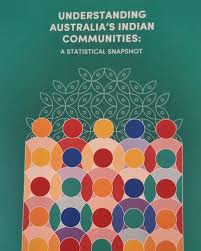
Australia is at a pivotal moment in its multicultural journey. With the recent release of Understanding Australia’s Indian Communities: A...

💡 Did You Know You Might Be Paying Too Much for Your Energy? Most people don’t realise they’re overpaying for electricity, gas, or...
In Australia today, we often hear about the beauty of our multicultural society — a place where people from different backgrounds live, work, and celebrate side by side. From Harmony Day to Diwali celebrations, Lunar New Year parades to Eid dinners, we’ve seen communities come together with colour, culture, and joy.
But lately, as I scroll through my social feeds, I’ve noticed something.
Multiculturalism has become a hashtag — a caption under a flag emoji or a selfie in someone else’s traditional attire.
And while these expressions can be positive, I believe it’s time we pause and ask:
👉 What is real multiculturalism?
👉 Are we celebrating cultures — or just sampling them?
👉 Are we connected — or simply coexisting?
This article is a reflection — part personal, part communal — from someone who has spent years working within and alongside diverse communities through Indians in Sydney. It’s a call for depth, not decoration. For true inclusion, not tokenism. For a version of multiculturalism that’s lived, not just performed.
Let’s start with a clear and SEO-friendly definition:
Multiculturalism is the peaceful and respectful coexistence of people from different cultural, ethnic, and linguistic backgrounds within a society. But more than coexistence, it’s about active inclusion, mutual respect, and equal opportunity.
True multiculturalism doesn’t just happen when people from different backgrounds share space — it happens when they share power, voice, and belonging.
Yes, festivals, food, and fashion are wonderful. They’re joyful expressions of culture — and should absolutely be celebrated.
But if that’s all we focus on, we reduce entire cultures to what’s palatable, Instagrammable, or exotic. We fall into what some call “festival multiculturalism” — a surface-level version of inclusion that looks good in photos but lacks real impact.
The hard questions get lost:
Multiculturalism is not just about dancing to each other’s music — it’s about hearing each other’s truth.
In cities like Sydney and Melbourne, it’s easy to point to diversity — it’s everywhere. Restaurants from every continent, people speaking multiple languages, festivals every weekend.
But diversity is not the same as inclusion.
You can have a room full of people from different cultures — and still have inequality, exclusion, or silence.
Inclusion means:
Inclusion is intentional. It doesn’t just happen. It must be built.
Through Indians in Sydney, I’ve learned that the most powerful moments of multicultural connection often go unnoticed.
They happen:
These may seem small. But they are the real fabric of multiculturalism — lived out quietly, consistently, and with care.
Multiculturalism means nothing if we don’t see ourselves reflected in the stories, systems, and spaces around us.
Representation is not just about optics. It’s about power. It’s about breaking down structural inequality so that every voice — not just the dominant one — is included in shaping our shared future.
Many migrants — especially those from Indian, South Asian, and other culturally diverse backgrounds — play a huge role in building this country’s success. They drive our taxis, run our restaurants, care for our children, treat us in hospitals, and innovate in our tech sector.
But they also face:
For multiculturalism to be authentic, we must not just celebrate culture — we must protect the people who bring it.
This includes standing up for international students, new migrants, and casual workers — who often contribute most but receive the least.
Here are a few ways we can all go beyond surface-level multiculturalism and start living it deeply:
✅ Listen more than you speak — especially to voices that are often overlooked.
✅ Learn how to pronounce someone’s name — and mean it.
✅ Celebrate all cultures — not just the ones that are “fun” or familiar.
✅ Acknowledge the land you’re on — and the First Nations people who never left.
✅ Include, don’t just invite — whether at work, in schools, or in social spaces.
✅ Call out racism and bias — even when it’s uncomfortable.
Multiculturalism starts at home — in the values we teach, the language we use, and the respect we show.
It’s easy to post a picture from a cultural event and call it a win for diversity.
But multiculturalism is not a trend. It’s not a campaign.
It’s not a selfie in a sari or a story of “Look where I went.”
It’s how we behave when no one is watching.
It’s how we treat the person bagging our groceries or cleaning the office.
It’s in the policies we support, the jokes we challenge, and the quiet moments when we choose empathy over ignorance.
As Australians — especially those of us with migrant stories — we have the chance to build something extraordinary. A nation not just of many cultures, but of deep, lasting respect between them.
That’s the legacy we should aim for.
Not just to appear multicultural — but to be it. Fully. Honestly. Humbly.
So to every leader, teacher, policymaker, and neighbour:
Don’t just post multiculturalism. Practice it. Promote it. Protect it.
That’s where real belonging begins.
With hope and heart,
– Indians in Sydney